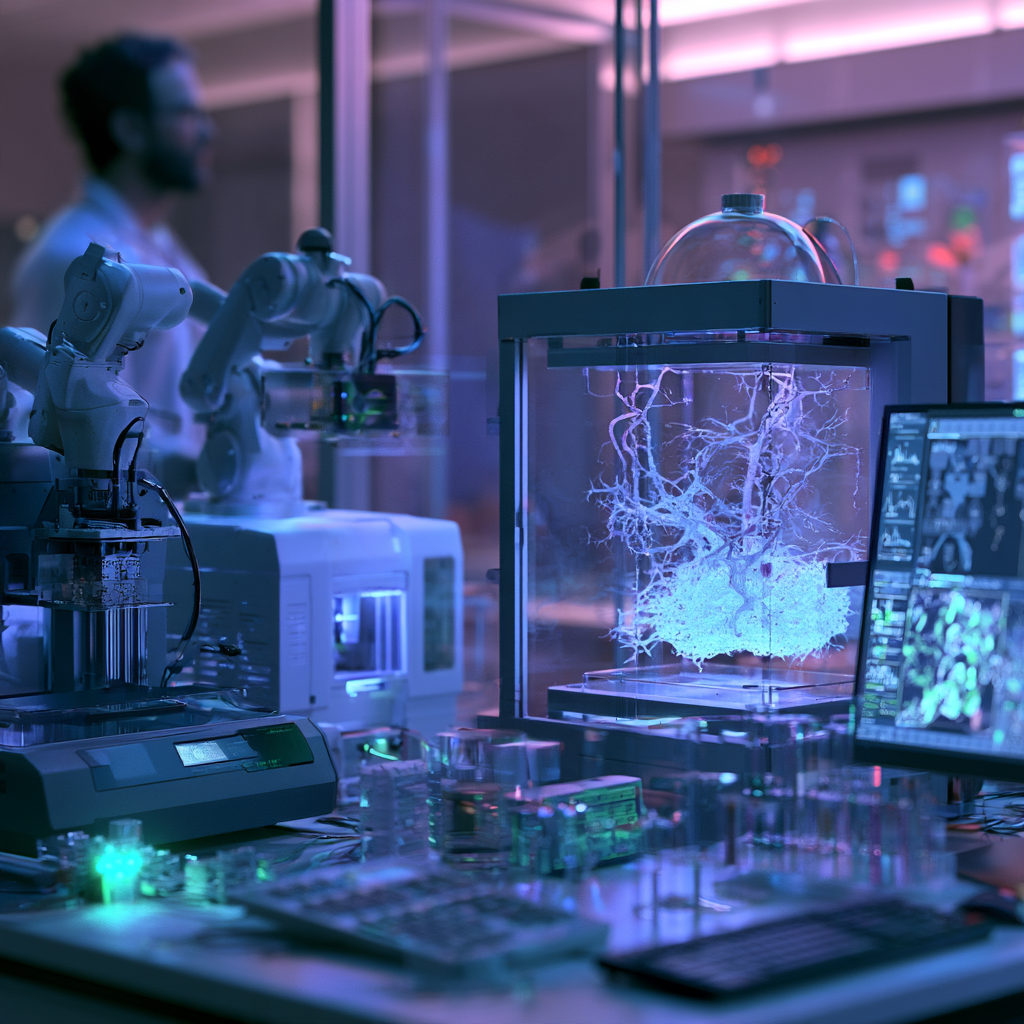
Quantum Computing and Protein Folding: What It Means for Tissue Engineering
Quantum computers promise to simulate molecules classical machines struggle with. Here is what that could mean for biomaterials, minus the hype.

Biology is, at bottom, chemistry, and chemistry is quantum mechanics. Simulating molecules exactly is brutally hard for classical computers, which is one reason quantum computing excites drug and materials researchers.
Where quantum might help
- Molecular simulation: modeling how bioink polymers crosslink, or how growth factors bind receptors, at quantum accuracy.
- Optimization: hard combinatorial problems like designing vascular networks or print paths.
- Quantum sensing: ultra-sensitive sensors (like diamond NV centers) could one day monitor living tissue in new ways.
Where we actually are
AI has already transformed protein structure prediction on classical hardware, as AlphaFold showed. Today’s quantum computers are still small and noisy, and demonstrations on real biological problems remain modest. Most experts expect practical chemistry advantage to arrive gradually, first in narrow problems.
Near-term, the biggest quantum impact on bioprinting will likely come from hybrid quantum-classical tools feeding better materials into very classical printers.
Keep exploring in Deep Tech.
Enjoyed this? Get the next one.
Breakthroughs, tools and weird-but-true science in your inbox. Free, no spam, unsubscribe anytime.