AI + Bioprinting Convergence: The Future of Intelligent Organ Manufacturing
AI + Bioprinting Convergence: The Future of Intelligent Organ Manufacturing
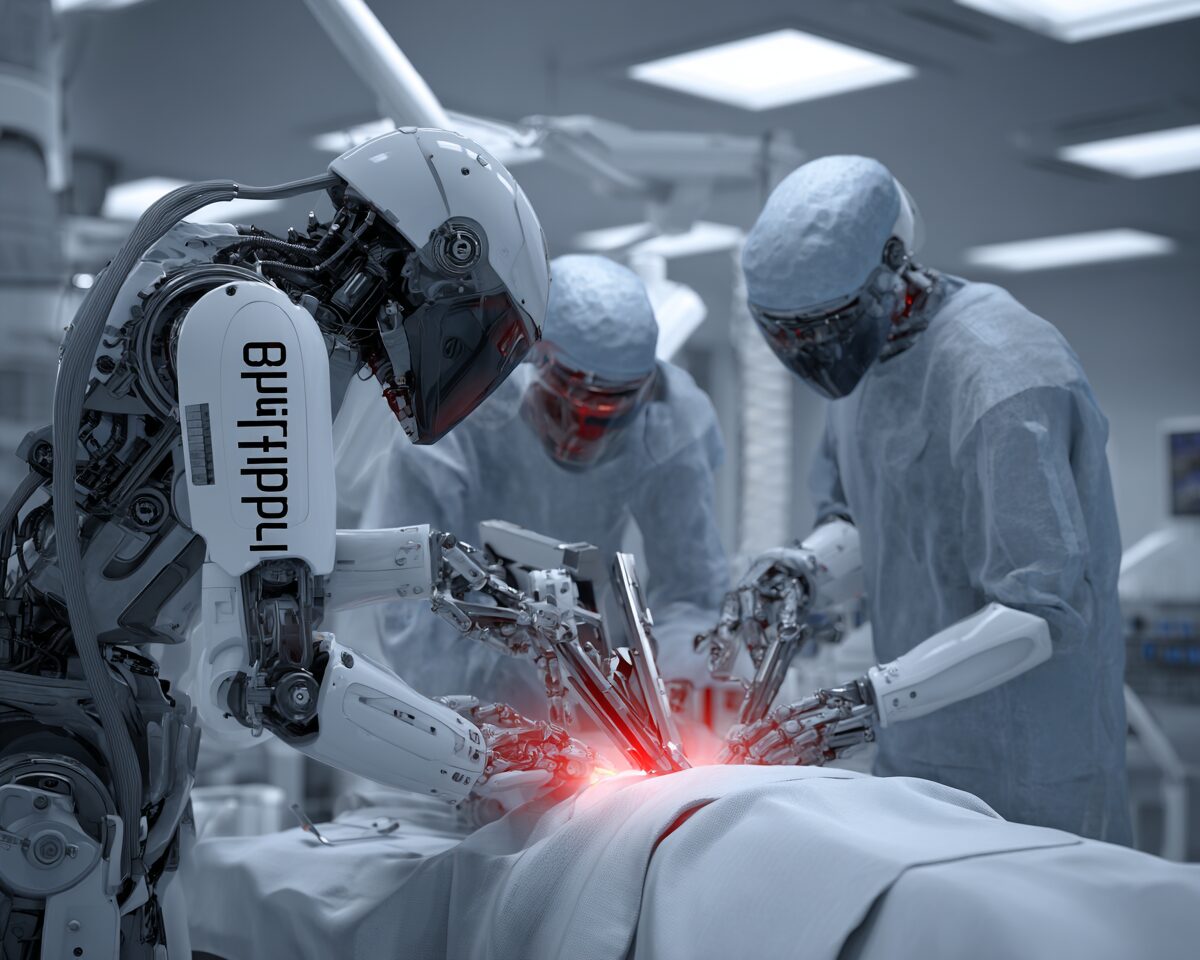
The convergence of Artificial Intelligence and Bioprinting is rapidly becoming one of the most exciting frontiers in healthcare, biotechnology, and regenerative medicine. While bioprinting has already demonstrated the ability to create tissue structures, blood vessel networks, and experimental organ models, AI is helping overcome the biological complexity that has historically slowed progress.
Together, these technologies are laying the foundation for a future where organs, tissues, and personalized therapies can be designed, simulated, optimized, and manufactured with unprecedented precision.
Why AI Is Becoming Essential to Bioprinting
Biological systems are extraordinarily complex.
Every tissue contains:
- Multiple cell types
- Blood vessel networks
- Signaling pathways
- Structural proteins
- Dynamic growth processes
Traditional trial-and-error research can take years to optimize even a single tissue design.
Artificial intelligence dramatically accelerates this process by identifying patterns and solutions that humans may never discover on their own.
Instead of relying solely on laboratory experimentation, researchers can increasingly use AI models to predict biological outcomes before a single cell is printed.
AI-Designed Tissue Structures
One of the most promising applications is tissue design.
AI can analyze:
- Cell behavior
- Tissue architecture
- Mechanical properties
- Nutrient requirements
- Oxygen diffusion patterns
Using this information, algorithms can generate optimized tissue structures specifically designed for successful growth and function.
Future systems may automatically create:
- Skin grafts
- Cartilage replacements
- Liver tissues
- Kidney structures
- Cardiac tissue patches
customized for individual patients.
Optimizing Bioinks with Machine Learning
Bioinks are among the most critical components of bioprinting.
These specialized materials contain:
- Living cells
- Growth factors
- Biomaterials
- Structural scaffolds
Developing effective bioinks has traditionally required extensive experimentation.
AI can accelerate this process by:
- Predicting bioink performance
- Optimizing formulations
- Improving cell viability
- Enhancing tissue maturation
- Reducing development costs
Researchers can test thousands of virtual bioink combinations digitally before selecting the most promising candidates for laboratory validation.
Predicting Tissue Growth
One of the greatest challenges in bioprinting is understanding what happens after printing.
A tissue may look perfect initially but behave differently as cells grow and interact.
AI models can now help predict:
- Cell migration
- Tissue maturation
- Vascular development
- Mechanical stability
- Long-term viability
This predictive capability significantly reduces the time required to develop functional tissues.
Modeling Organ Function Before Printing
Before attempting to fabricate a complex organ, scientists increasingly use AI-driven simulations to model:
- Blood flow
- Oxygen transport
- Cellular communication
- Metabolic activity
- Functional performance
These simulations allow researchers to identify potential issues long before fabrication begins.
The result is faster development cycles and more reliable outcomes.
Digital Twins of Biological Systems
Perhaps the most revolutionary concept emerging from AI and bioprinting is the creation of biological digital twins.
A digital twin is a virtual replica of a biological system.
Future digital twins may replicate:
- Individual organs
- Entire patients
- Disease progression
- Treatment responses
Doctors could potentially simulate therapies on a patient’s digital twin before administering treatment in real life.
This would enable:
- Personalized medicine
- Precision treatment planning
- Reduced risk
- Improved outcomes
The Path Toward Printed Organs
The ultimate goal of bioprinting remains the fabrication of fully functional human organs.
Current challenges include:
- Vascularization
- Tissue complexity
- Immune compatibility
- Long-term function
AI is helping address each of these obstacles by optimizing design strategies and identifying biological patterns that improve success rates.
Researchers believe AI could significantly shorten the timeline for creating:
- Bioprinted kidneys
- Hearts
- Livers
- Pancreases
- Lung tissues
Personalized Medicine at Scale
One of the most powerful outcomes of AI-driven bioprinting is personalized healthcare.
Future treatments may be designed specifically for individual patients using:
- Genetic information
- Medical history
- Biomarker data
- Digital twin simulations
Instead of generalized treatments, patients could receive therapies uniquely optimized for their biology.
Accelerating Regenerative Medicine
Regenerative medicine seeks to repair, replace, or regenerate damaged tissues and organs.
AI-enhanced bioprinting could revolutionize treatments for:
- Heart disease
- Diabetes
- Neurodegenerative disorders
- Spinal cord injuries
- Burn injuries
- Organ failure
Rather than managing symptoms, future therapies may restore normal biological function.
The Future Biological Factory
The next generation of bioprinting facilities may look very different from today’s research labs.
Future biofabrication centers could feature:
- AI-driven design systems
- Autonomous bioprinters
- Robotic cell handling
- Automated quality control
- Real-time tissue monitoring
These facilities may function as biological manufacturing plants capable of producing personalized tissues and therapies on demand.
The Bigger Picture
The convergence of AI and bioprinting represents more than a technological advancement—it may redefine healthcare itself.
Just as AI is transforming software development and 3D printing is transforming manufacturing, AI-powered bioprinting has the potential to transform medicine from a system focused on treatment into one focused on regeneration and replacement.
The future may include:
- On-demand organs
- Personalized tissues
- Biological digital twins
- AI-designed regenerative therapies
- Fully automated biofabrication facilities
As artificial intelligence continues to advance, the dream of manufacturing living tissues and eventually functional organs may move from science fiction to everyday medical reality.
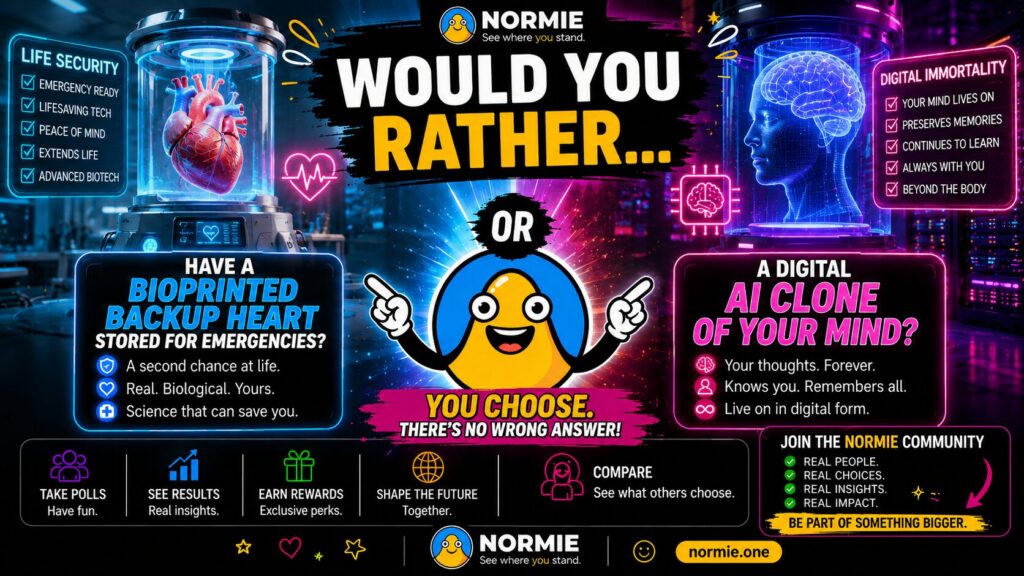
Would You Rather: Have a Bioprinted Backup Heart Stored for Emergencies… OR A Digital AI Clone of Your Mind?
Imagine waking up tomorrow and learning that science has finally crossed two of humanity’s most extraordinary frontiers.
In one future, you have a perfectly healthy bioprinted backup heart stored in a medical facility, ready to save your life if your natural heart ever fails.
In the other future, you possess a fully functional digital AI clone of your mind—an artificial intelligence that thinks like you, remembers everything you know, and can continue operating even when you’re gone.
So the question is:
Would You Rather…
❤️ Have a Bioprinted Backup Heart Stored for Emergencies…
OR
🧠 Have a Digital AI Clone of Your Mind?
At first glance, this sounds like science fiction.
Yet both technologies are actively being pursued by scientists, researchers, biotech companies, and AI laboratories around the world.
The deeper you think about this question, the more it becomes a debate about the future of humanity itself.
The Case for the Bioprinted Heart
For most of human history, organ failure has been one of the greatest limitations on life expectancy.
Millions of people worldwide wait for organ transplants.
Many never receive them.
Bioprinting seeks to change that.
Researchers are developing technologies capable of printing living tissues using bioinks, stem cells, and advanced biological scaffolds.
The long-term goal is simple but revolutionary:
Manufacture replacement organs on demand.
A bioprinted backup heart could potentially mean:
- No transplant waiting lists
- No donor shortages
- Reduced rejection risks
- Longer, healthier lives
- Personalized medicine
In this future, your body becomes repairable.
Instead of fearing organ failure, you simply replace damaged components when necessary.
The dream of regenerative medicine moves from possibility to reality.
The Case for the AI Mind Clone
Now imagine something even stranger.
What if every memory, thought pattern, preference, experience, and personality trait could be modeled digitally?
A sophisticated AI clone might:
- Answer questions as you would
- Preserve your knowledge
- Continue conversations
- Learn from new experiences
- Function as a digital extension of yourself
Some futurists believe this could become a form of digital immortality.
Others argue it would merely be a copy.
The philosophical question becomes:
If an AI thinks exactly like you, is it actually you?
Or is it simply a highly advanced simulation?
The answer may forever remain one of the greatest mysteries of consciousness.
Which Is More Valuable?
The bioprinted heart preserves your biology.
The AI clone preserves your information.
One protects your body.
The other protects your identity.
One extends life.
The other attempts to preserve legacy.
The choice forces us to confront a fundamental question:
What matters more?
The continuation of the physical self…
Or the continuation of the mental self?
The Future May Include Both
The most fascinating possibility is that future generations may never have to choose.
Advances in:
- AI
- Bioprinting
- Regenerative medicine
- Brain-computer interfaces
- Digital twins
- Personalized healthcare
could eventually converge.
Future humans may possess:
- Bioprinted organs
- AI health assistants
- Digital memory systems
- Personalized biological models
- Regenerative therapies
The boundaries between biology and technology may become increasingly blurred.
The Bigger Question
Perhaps this debate is not really about technology.
It is about how we define ourselves.
Are we our bodies?
Are we our memories?
Are we our consciousness?
Or are we something deeper that cannot be printed, copied, uploaded, or engineered?
The technologies of tomorrow may force humanity to answer questions that philosophers have debated for thousands of years.
And those answers may shape the future of civilization.
What’s Your Choice?
❤️ A Bioprinted Backup Heart Stored for Emergencies
OR
🧠 A Digital AI Clone of Your Mind
Which would you choose—and why?
Join the Debate on Normie
Think you know your answer?
Normie is building a new kind of social platform around personality, behavior, psychology, AI, and thought-provoking questions exactly like this one.
Explore thousands of polls, discover how others think, build your personality profile, and participate in the growing behavioral intelligence network.
Normie Links
Why This Question Is So Powerful
This isn’t really a question about technology.
It’s a question about:
- Mortality vs Legacy
- Biology vs Information
- Human Enhancement vs Human Identity
- Longevity vs Digital Immortality
- What It Means to Be Human
And those are exactly the kinds of questions that generate the deepest conversations, strongest opinions, and most fascinating insights into human behavior.
Enjoyed this? Get the next one.
Breakthroughs, tools and weird-but-true science in your inbox. Free, no spam, unsubscribe anytime.